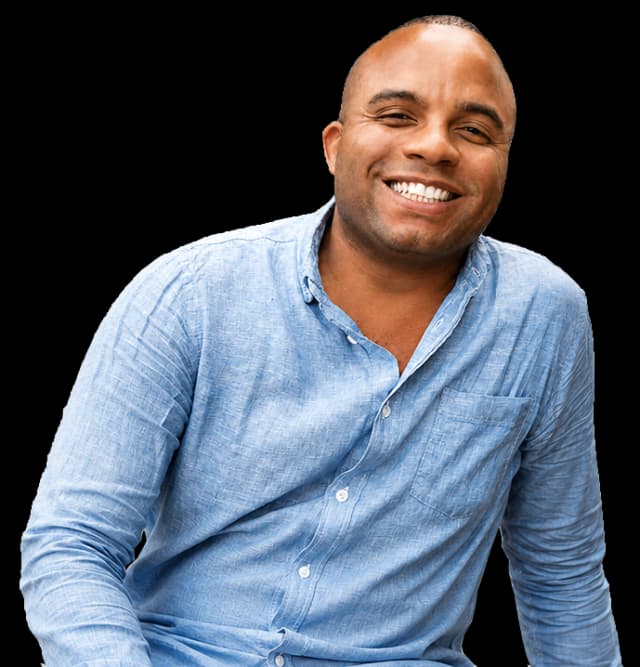
Madu Alikor
About
Expert Generalist. Software Architect. Hands-on Technical Leader.
- Years shipping
- 25
- Level
- Principal / Architect / Fractional CTO
- In production code
- 20 to 30%
- Production languages
- 9
I'm an Expert Generalist with 25 years of hands-on software delivery, currently Principal AI Engineer on the Cloud & Platform Services team at AVEVA, where I lead the Core AI Services platform and contribute to the Hypervelocity Engineering initiative around agentic coding.
Across that arc I've worked at principal and architect level, leading delivery for organisations of up to 200 engineers while staying 20 to 30% in production code. The work has gone deeper in a handful of stripes (platform engineering, regulated and secure systems, AI/ML platform work, and cross-stack delivery) sitting on top of a wider breadth that lets me bridge design, data, dev and ops without needing a separate person at every seam.
The domain breadth is part of the point. I've built fintech systems at Alpari and a derivatives pricing platform at Credit Suisse; regulated health tech at Medisanté, Philips (Clinical AI for 300+ hospitals), and BrightInsight (multi-cloud platform serving 20M API calls a day); entertainment and ticketing at Live Nation and the PGA Tour Windows Phone app at Miomni; marketplaces and retail at Just Eat (one of the first 20 technical hires), How Splendid, and most recently dunnhumby; research at Microsoft Research Cambridge under Pushmeet Kohli (now VP at Google DeepMind); and legal-tech under SC clearance at Blackthorn, integrating directly with the Crown Prosecution Service. Today, at AVEVA, the domain is industrial software.
What ties it together is a pattern-driven view of the stack. Tools change (I've shipped production code in Go, Rust, Python, TypeScript, C#, Java, Kotlin and Swift), but the underlying patterns (DDD, CQRS, event sourcing, reconciliation loops, declarative IaC, GitOps) translate across all of them. So does the practice: TDD, contract testing with Pact, compliance-driven CD against ISO 13485, IEC 62304, GDPR, HIPAA and MDSAP.
At AVEVA I'm currently building cloud-native Core AI Services on Azure and AKS (secure, versioned APIs and SDKs that standardise how product teams consume AI capabilities) while shaping the organisation's agentic-coding practice around GitHub Copilot CLI, Claude Code and ChatGPT Codex. The interesting work, as ever, lives at the intersection of platform thinking, regulated delivery, and the new generation of AI-assisted engineering.
Alongside this, I work with Ultromics as a part-time Platform Consultant and Platform Team Co-Lead, co-leading six engineers for 16 hours over two days per week, from July 2026. The work combines clinical AI platform engineering, an automation initiative and introducing the company to agentic software engineering.
At Ultromics, that agentic work uses Codex, Claude and custom harnesses. I am setting up Microsoft Foundry with company IP protection as a design priority, have built a chatbot to help debug production incidents, and use LLMs for production monitoring.
Domains
- Industrial software
- Health tech
- Fintech
- Retail & marketplaces
- Entertainment & ticketing
- Research
- Legal-tech (SC)
My story
I started in 2001 at DesignSquad, a small London agency where the work was CRUD systems, admin dashboards and ecommerce sites for SMEs on .NET 1.0. Small enough to ship end-to-end, large enough to learn that separation of concerns, code generation and component reuse weren't academic ideas. I stayed seven years and was leading small pods by the end of it.
Live Nation came next, and with it my first taste of real scale: a multilingual CMS rolled out across 15+ Live Nation properties globally, integrated with Ticketmaster, migrated from .NET 1.1 WebForms to ASP.NET MVC under TDD and CI. I was promoted from senior to lead during that work, partly for the code, mostly for being willing to coach the rest of the team into the new practices.
The Just Eat year was formative in a different way. I was one of the first twenty technical hires, helping re-architect the platform out of its student-prototype origins. The detail I remember most isn't the framework migration: it's reverse-engineering EPOS printers so restaurants could accept orders directly. That's where the rule crystallised for me: learn the domain before you design the abstraction.
I held the Microsoft Research Cambridge stint that same year, working with Pushmeet Kohli (now VP at Google DeepMind) on human-in-the-loop ML data collection for Kinect, Photosynth and facial-tracking research. It was early MLOps before that name existed, and it seeded a lasting interest in ML as a platform problem, not a notebook problem.
The shift into regulated systems came through Medisanté and then Philips, medical IoT and a clinical AI App Store running on Kubernetes operators inside air-gapped hospital VMware estates. ISO 13485, IEC 62304, HL7/FHIR. The bigger lesson was that compliance and continuous delivery aren't in tension when the rules live in code.
BrightInsight was where that lesson paid off most. We decoupled indemnity-insurance rules from application code into a JSON-based DSL, so underwriters could create and modify products independently while we held legal determinism (same answers, same decision, every time) across daily releases. It remains the work I'm proudest of, because it gave domain specialists ownership rather than a ticket queue.
dunnhumby and now AVEVA are where the most recent thread runs: Rust, Pact-driven contract testing, LLM-based text-to-insight workflows, and now agentic coding at platform scale. New tools, same patterns underneath.
Selected employers
- AVEVA
- dunnhumby
- BrightInsight
- Philips
- Medisanté
- ThoughtWorks
- Credit Suisse
- Microsoft Research
- Just Eat
- Live Nation
How I work
Partner with specialists, not around them. The best abstractions I've built came from sitting next to the people who lived in the domain: underwriters at BrightInsight, clinicians on the HL7 feedback loops at Philips, restaurant operators wiring EPOS printers at Just Eat. Their constraints shape the design.
Trust the patterns underneath the tools. DDD, CQRS, event sourcing, reconciliation loops, declarative IaC, GitOps: these translate across stacks. I've shipped production code in nine languages; the patterns travel, the frameworks don't.
Stay hands-on. I keep 20 to 30% of my time in production code at every seniority level, including principal. Architecture decisions decay quickly if you're not the one paying for them in the editor.
Let curiosity be steered by the problem. I read widely and try new tools constantly (most recently agentic coding with Claude Code, Copilot CLI and Codex), but the question is always "does this help the specific work in front of us," not "is this what's trending."
Pair compliance with continuous delivery. ISO 13485, IEC 62304, HIPAA, GDPR, MDSAP: none of these are at odds with daily releases if the rules are encoded in code, tested deterministically, and gated in CI. I've spent a decade proving that out.
Security clearances: I've held Security Check (SC) and Counter Terrorist Check (CTC) during regulated and government-facing work (Blackthorn / Crown Prosecution Service, EY). My SC is not currently active. It lapsed after the engagement ended and is renewable on the next clearance-required role. CTC was similarly held historically.
Want to dig deeper?